Related Posts with Thumbnails
Showing posts with label Sides. Show all posts

Monday, July 25, 2011

Thai Salmon with Lemon Couscous


Sesame Ginger Salmon

1 T garlic minced
2 T ginger minced
1 T sake
1/2 cup soy sauce
1/4 cup sesame oil

Marinate salmon in fridge for 3 hours. Bake on baking sheet for 8 minutes at 450.

Lemon Couscous

5.4 oz couscous
2 cups chicken broth
1 T lemon rind
1/3 cup lemon juice
2 t butter
2 T parsley
1/3 cup peas

Combine the broth, lemon rind and juice in a saucepan. Bring to a boil. Add the couscous, remove from heat and cover. Let stand for 10 minutes. Stir in parsley, butter and peas. Serve with salmon.


Friday, October 29, 2010

Balsamic Roasted Heirloom Carrot


Not only do we enjoy food because of the way it tastes and smells, but also because of the way it looks. There is nothing more pleasing to the eye than a plate full of beautiful colors. That is why I was excited to roast these multicoloured heirloom carrots I bought at the local market. The yellows, oranges, blues and purples made the plate look very vivacious, which transcended into me feeling the same way. I kept them whole and unpeeled to get that rustic fall appearance. Tossing the carrots in balsamic vinegar added a complex and faintly sweet flavour to these vegetables. The carrots were a side dish to a creamy root vegetable mash and mustard and herb crusted top sirloin which was cooked by rotisserie on the grill.
Balsamic Roasted Heirloom Carrots

1 lbs heirloom carrots (washed, unpeeled)
1-2 cloves garlic, minced
2-4 T balsamic vinegar
1 T olive oil
Salt and pepper to taste

Bring a medium pot of water to boil and add the carrots. Boil them for 10 minutes. Remove and place carrots in a bowl. Toss with olive oil, vinegar, salt & pepper. Place them on a baking sheet or pan and cook them for 30 minutes at 350F.


Heirloom Carrots at the Parkdale Market

Thursday, September 2, 2010

Watermelon, Cucumber & Feta Salad


The heat waves that hit eastern Ontario and other parts of the world this summer has been unbearable at times. During the summer and fall I love to sit out on my patio for dinner as much as possible. But there were simply a few evenings that were 40C and impossible to handle.
A summer salad made with juicy and sweet watermelon, crunchy market fresh cucumbers, salty feta cheese and fresh mint from my garden sounded like a refreshing option. I was skeptical about the addition of mint, but the contrast of flavours between the salty feta and mint really complimented each other. It also paired nicely with these cilantro and lime chicken kebabs. This recipe is from the LCBO Food & Drink magazine.
This weekend however should be beautiful, a cold front is moving in and it is a long weekend!!! I had plans to go hiking and shopping in New Hamsphire, but plans changed and I will be hanging out in Ottawa. I am looking forward to drinks out with friends, a backyard bbq on labour day and maybe just maybe get some of those house projects done that I've put off all summer.
Watermelon, Cucumber & Feta Salad

1⁄2 English cucumber
1 seedless watermelon wedge
1 T red wine vinegar
1 small garlic clove, minced
3 T olive oil
1⁄4 tsp each salt and pepper
1⁄4 cup shredded mint leaves
1⁄3 cup crumbled feta cheese (optional)

Slice cucumber and watermelon into chunks. Place both in a large bowl and toss. Whisk vinegar with garlic, oil, salt and pepper. Drizzle over watermelon mixture and stir. Add mint and feta and gently toss. Tumble onto a platter and serve at room temperature.

Friday, August 27, 2010

Summer Squash & Goat Cheese Tart


A couple weeks ago I was invited to a potluck dinner with some girls. It was a last minute get together during the week so none of us really expected too much in the sense of food and really didn’t know if we’d have 4 desserts and no main, or all salads etc.... Well we should not have under estimated ourselves as the dinner was complete with a large beautiful cheese platter, an assortment of crackers and baguette, Asian rice wraps with peanut dipping sauce, green leaf salad with summer fruit, a summer squash tart, and lots of dessert and plenty of red wine. Although making an entire dinner for friends is nice, the potluck, although old school as it might sound, is still a great theme. In keeping with its origin the potluck dinner provides a since of community where everyone has contributed and everyone gets praise for it.

All summer I have wanted to make a summer squash tart and considering it is almost fall I figured it was about time I stop thinking about it and just do it. I really wanted to grill the squash and make my own crust. With the last minute invite I was happy to sautee the veggies and buy a pre-made pie crust. The dish was simple to make and delicious. It would be great as a side or main meal with a side of salad.

Summer Squash Tart

1-2 yellow summer squash (zucchini), sliced
2 shallots, minced
½ T chopped fresh rosemary or thyme
1 garlic clove, minced
Fresh cracked pepper
Pie crust (bought or homemade)
1 egg white, beaten
Goat cheese or blue Roquefort

Roll out the pie crust to 13” round.

In a skillet cook the squash, garlic and shallot for about 7min, until slightly soft, but not fully cooked.

Remove from heat and stir in the rosemary and pepper.

Preheat the oven to 400F.

Spread the cheese over the bottom of the pie crust, leaving a 2” boarder around the edges.
Arrange the squash mixture in the centre of the pie crust over the cheese. Then fold the edges up over the squash. Brush with egg white.
Bake on a baking sheet for 35-40 minutes.


Wednesday, August 18, 2010

Chili-LIme Sweet Potato Fries with Chipotle Mayo


You cannot get a more classic American meal then burger and fries. This pair has been made famous from diners in the 50s and 60s and by the fast food movement which although began earlier grew in popularity in the 70s onward. The burger and fry combo has no bounds as it can be served as part of a backyard barbeque on a summer’s day, grabbed via drive-threw on your way out of town, or ordered in a five star restaurant, likely as a gourmet slider with fancy match-stick potatoes served with seasonal chutneys and aioli.

With so many fun things to do with burgers and fries, I thought I would bring the classic diner to my backyard. I used sweet potato for fries and added some complimentary spices and served these fries up with a spicy chipotle mayo. I just loved dipping my crispy sweet fries into creamy and spicy mayo. These fries were served with a classic beef burger. The plating was a large red basket lined with brown paper (could also use newspaper). It was fun to sit in the backyard eating burgers in fries in what felt like a dish plated at a Diner. I haven’t perfected the plating and will certainly be doing it again in the near future.

Chili Lime Sweet Potatoe Fries & Chipotle Mayo


2 medium sweet potatoes, sliced into fries
(keep on some of the skin for rustic look)
1 T olive oil
1 T lime juice
½ tsp chilli powder
¼ tsp cayenne
Salt and pepper

Preheat the oven to 425 F.

Once the potatoes have been cut up, place them in ice cold water for 30min in the fridge. Then drain the fries and pat them dry. This will help the outer part of the fries to get crispier. But noting the high sugar content of sweet potatoes the inner will inevitably remain soft, which is what makes them so tasty.

Note: Coating the outside of the fries with egg white is also a tip I heard of. I think it did help add a bit more crisp to the outside as well.

Add the oil, lime juice and spices to the fries. On a baking sheet covered with parchment paper line the fries without touching each other.

Bake for 30-40 minutes. Watch them carefully so they do not burn and flip them once during cooking. You may broil them at the very end for about 2 minutes, but be careful not to dry them out.


Check out this delicious burger recipe.

Thursday, October 15, 2009

Veal Piccata with Pumpkin Polenta


Having recently been to Italy, I have been craving veal scaloppini with porcini mushrooms. I had this dish a few times while in Rome and Venice and it was so delicious - light, tender and served with a nice silky wine and mushroom sauce. I was going to make this same dish and eventually we get around to doing that. However I decided to try something different and went with a Veal Piccata recipe from Cooking Light Italian.

To celebrate the fact that fall is here I served it with some colourful pumpkin polenta. I have always found polenta to be dry and not overly flavourful. The addition of the pumpkin really enhanced the flavour and texture, that I have new found hope for polenta.

Veal Piccata

2 tablespoons all-purpose flour
Dash of salt
1/4 teaspoon black pepper
1 tablespoon water
1 large egg white
1/3 cup Italian-seasoned breadcrumbs
4 (2-ounce) veal cutlets
2 teaspoons olive oil
1 cup fat-free, less-sodium chicken broth
1 teaspoon grated lemon rind
2 to 3 tablespoons fresh lemon juice
1 tablespoon capers, drained and rinsed
Lemon wedges (optional)

Combine flour, salt, and pepper in a shallow dish. Combine water and egg white in another shallow dish, stirring with a whisk. Place breadcrumbs in a third shallow dish. Working with 1 cutlet at a time, dredge in flour mixture. Dip floured cutlet in egg white mixture; dredge in breadcrumbs.
Heat oil in a large nonstick skillet over medium-high heat. Add cutlets to pan; cook 2 minutes on each side or until lightly browned. Remove from pan; keep warm.

Add broth, rind, juice, and capers to pan; simmer 2 minutes, stirring constantly. Pour over cutlets; serve immediately. Garnish with lemon wedges, if desired.

Pumpkin Polenta

1/2 cups 1% low-fat milk
2 cups water
3/4 cup canned pumpkin
1 1/4 teaspoons salt
1 1/4 cups instant dry polenta
3/4 cup (3 ounces) grated fresh Parmesan cheese
2 tablespoons 1/3-less-fat cream cheese
1 tablespoon chopped fresh sage
1/4 cup (1 ounce) shaved fresh Parmesan

Bring milk and water to a boil in a large saucepan over medium heat. Add pumpkin and salt; stir with a whisk. Reduce heat to low, and gradually whisk in polenta; cook 1 minute or until thick. Remove from heat. Add 3/4 cup grated Parmesan, cream cheese, and sage; stir until cheeses melt. Top with shaved Parmesan. Serve immediately.


Wednesday, July 8, 2009

Tomato-Feta Orzo Salad

This simple orzo salad is perfect for summer at the cottage or picnics. It took me no time to make and was a popular hit on Canada Day. If you want to improve the flavor you could grill or roast the tomatoes first, but it is good just as is. I am going hiking this weekend and will likely make a large bowl of this to take with me and help energize me through what might be a long long hike.

2 cups orzo
3 cups cherry tomatoes halved
2/3 cups feta
1/2 cup fresh coriander, chopped
1/2 cup fineldy diced red onion
4T red wine vinegar
2 T olive oil
lemon zest
juice of 1/2 lemon
salt and pepper to taste

Cook the pasta, rinse and drain it. Pour pasta in a large bowl. Add the rest of the ingredients and toss well. Place in fridge and take out 5-10min before serving.

Another great orzo salad is Orzo Salad with Dill & Feta (Roasted Shrimp Optional)

Friday, June 5, 2009

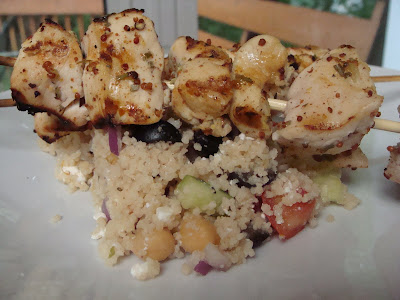
Lemon-Rosemary Chicken Kebabs with Greek Inspired Couscous


As soon as you open the backdoor to my house you are hit by the invigorating aroma of rosemary and basil. Smelling the fresh herbs in the house inspired me to use them in last evening’s dinner. When I think rosemary I automatically associate it with Mediterranean cuisine as well as chicken, although it has many culinary uses (I added it to an cranberry-apple galette a few months back). The following lemon-rosemary marinade provided a woody and fresh citrus flavour to these grilled chicken kebabs. The kebabs were complimented with a Greek-inspired couscous salad. Could also serve chicken skewers with flatbread/pita and tzaziki or a greek salad.

Lemon-Rosemary Kebabs

1 lbs chicken breast skinned and cut in to large cubes
¼ cup fresh lemon juice
2 cloves garlic minced
1 T grainy Dijon mustard
1 tsp lemon zest
2 T fresh rosemary chopped
Freshly ground pepper to taste

In a medium bowl mix together all the ingredients. Add the chicken chunks and let marinade in the fridge for about 30 minutes.

Using pre-soaked wooden skewers, skewer an even amount of chicken chunks onto each skewer.

On a pre-oiled and pre-heated grill (med-high) cook the skewers on medium heat 6-7 minutes a side, until white in center.

Serve on a bed of Greek inspired couscous.

Greek Inspired Couscous


1 1/2 cups water
1 cup whole wheat couscous
1/2 tsp dried oregano
1 1/2 cups diced plum tomatoes (about 3-4)
1 cup diced peeled cucumber
1/3 cup crumbled feta cheese
1/4 cup black or kalamata olives, ripe and halved
3 T diced red onion
1 (15 1/2-ounce) can chickpeas, drained
Freshly ground pepper to taste
Lemon juice (optional)

Bring 1 1/2 cups water to a boil in a medium saucepan; stir in couscous and oregano. Remove from heat; cover and let stand 5 minutes. Fluff with a fork. Combine couscous, tomatoes, and next 5 ingredients (tomatoes through chickpeas) in a bowl; set aside. If desired could squeeze fresh lemon juice over couscous prior to serving.

More BBQ Kebab Recipes

Grainy Mustard Beef Kebabs

Grilled Salmon Skewers

Grilled Blackened Scallops

Tuesday, March 31, 2009

Grilled Sesame Asparagus Rafts


Saturday was a gorgeous day out, reaching a high of 15 C. After moving a friend into her condo, I went for a short mountain bike ride; sanded an old desk in the backyard and then opened a Corona on the deck. It was definitely a barbeque night. Although asparagus is not local yet, I did reluctantly purchase some to grill. I made asparagus rafts, brushed them with sesame oil and placed them on the grill for 4 minutes a side. Near the end of the grilling I sprinkled on some sesame seeds that the heat of the BBQ toasts.


First, wash the asparagus well. And using wooden skewers (soaked in water for 20 mins) pearce the asparagus and skewer them at both ends to make a raft.
Brush both sides with sesame oil and sprinke with ground pepper.

Place on a preheated grill (med high heat) for 4 mins a side.

Near the end of the grilling, sprinkle with sesame seeds, the heat of the grill will toast them, giving a nice nutty flavor.

Serve (in this case with BBQ Chicken)

Saturday, November 29, 2008

Foodbuzz 24, 24, 24: Bookclub Dinner with Animal, Vegetable, Miracle


I was fortunate to be selected to enter the “24 meals, 24 cities, 24 blogs” event featured by Foodbuzz. For this event I was delighted to pay tribute to my book club. We are a group of 4 women who get together every few months to discuss a novel over delicious food & drink. This month we decided on Barbara Kingsolver's Animal, Vegetable, Miracle. This blog will take you through our dinner menu (featuring local vendors), provide general comments & discussions about the book, as well as some favorite quotes.

BRIEF SUMMARY

Animal, Vegetable, Miracle is a narrative & part memoire of Kingsolver’s family journey from an urban life in Arizona to a rural lifestyle in West Virginia, where they vow to eat only locally grown food for one year (Exceptions: spices, coffee, olive oil and flour whereby fair trade alternatives were purchased). The chapters flow from month to month and season to season recounting how the family learns about farming, gardening, cooking and ultimately become an integral part of their community.

In Kingsolver’s words: “
This is the story of a year in which we made every attempt to feed ourselves animals & vegetables whose provenance we really knew and of how our family was changed by our first year of deliberately eating food produced from the same place where we worked, went to school, loved our neighbours, drank the water, and breathed the air."

The book was written with Barbara Kingsolver’s husband, Steven Hopp and their daughter Camille Kingsolver. Steven provides scientific based sidebars regarding the industrialization of food and the global impacts it has caused. He touches on subjects such as sustainability, energy consumption, factory farming, and food-safety. While Camille’s essays focus on a teenager’s point of view of eating locally and offers up the family’s seasonal recipes.


THE MENU

The book inspired our book clubs dinner menu. It would be hypocritical to discuss this book while eating factory farmed chicken or vegetables that were flown halfway around the world contributing to the use of fossil fuels. Instead it stood to good reason that the food & drink we consumed would be both seasonal and locally produced. In addition we thought it would be fun to try some recipes from the book Animal, Vegetable Miracle, adding variations where necessary to keep within the local and seasonal theme.

It was also a good challenge to try eating locally and seasonally in Ottawa in November, a season that although offers some tasty fruits and vegetables is not as flourishing and plentiful as summer. Most of the markets closed down by the end of October and if you had not made appropriate arrangements to store your food for use in the winter months, you may struggle to find local foods. After some research I discovered a few local vendors and local farms with greenhouses all within a 100 mile radius. Those that were not found in a 100 mile radius were purchased from sources within Ontario (such as the wine). The first course was this wonderful butternut bean soup, which a bookclub member decorated so elegantly with local organic thyme.


BUTTERNUT BEAN SOUP

1½ cups dried white beans, soaked overnight and drained
3 medium portabella mushroom caps, sliced (optional)
6 garlic cloves, finely chopped
1 tbs. thyme
1 tbs. sage
4 tsp. rosemary
2 butternut squash, halved lengthwise and seeded
Olive oil

Combine beans and spices in a large sauce pan, add water to cover amply, simmer for 30 to 40 minutes, until beans are tender and most water has cooked off. Add mushrooms toward the end.

While beans are cooking, drizzle a large roasting pan with olive oil and arrange squash skin-side-down. Cook at 400 for about 40 minutes, until fully tender when pierced with a fork. Remove from oven and serve each half squash filled with a generous scoop of bean soup.


The soup was hearty and delicious. Locally speaking, my dad was able to grow over 30 butternut squashes with nothing but sun and water.


SWEET POTATO QUESADILLAS


*Original recipe adapted to use green house spinach rather than Swiss chard and jalapeno cheddar & monterey jack instead of brie. The sweet potatoes, onion, garlic and spinach came from a local organic greenhouse. The flavor and texture of these quesadillas were likely the best I have ever had.

2 medium sweet potatoes
1/2 onion
1 clove garlic
1 T oregano
1 T basil
1 tsp cumin
chile powder and cayenne powder to taste
Olive oil for saute

Cut sweet potatoes into chunks, cook until soft, then mash. Chop and sauté garlic. Add onion in a large skillet. Add spices and sweet potato, mix well, adding a little water if it’s too sticky. Turn burner very low to keep warm without burning.

4 flour tortillas
4 oz. jalapeno cheddar (St. Albert Cheese Factory)
5 leaves spinach

Preheat oven to 400. Oil a large baking sheet, spread tortillas on it to lightly oil one side, then spread filling over entire toritillas. Top with slices cheese and spinach. Place another tortilla on top of filling and press down. Bake until browned and crisp (15 min.). Cut into wedges & serve.


HOMEMADE TOMATO SALSA

1-2 greenhouse tomatoes seeded and diced
1 small greenhouse onion
1 jalapeno from dad's garden
1/2 lime juiced (optional as not local)
salt and pepper to taste

Mix ingredients and serve with quesadillas.


ROASTED SEASONAL VEGETABLES


Beets, cubed
Red or white potatoes, cubed
butternut squash, cubed
parsnips, thickly sliced
carrots, thickly sliced
1/2 cup maple syrup
2 cloves garlic, minced
pepper
olive oil

Peel and cut vegetables into 1" cubes, and place in a roasting pan. Toss with maple syrup and olive oil, add minced garlic and pepper. Roast in a preheated oven at 400F for 45 min or until tender, stirring occassionally.

POACHED APPLES & PEARS

4 apples, removed core and cut into wedges (keep skin on for rustic look)
4 pears, remove core and cut into wedges (keep skin on)
1/2 cup of liquid honey
2 vanilla beans, split and scrapped
4 cinnamon sticks or 1/4 tsp of cinnamon
2 quarts of water
juice of one lemon

In a crockpot or large pot place the apples, pears, vanilla, cinnamon and honey. Cover with water then bring to a simmer over medium to low heat for about 20mins. Once apples and pears are soft enough remove them using a slotted spoon and place on a plate. Reduce the poaching liquid to a light syrup then place fruit back in crockpot and hold on warm until ready to serve. Serve with ice cream and vanilla pod or cinnamon stick.

The flavors and aroma of vanilla, nutmeg and cinnamon in these poached fruits are so warm and comforting.


Much of the food used in the meals were found at the Ottawa Organic Market. Above is my husband looking for local organic vegetables, but getting distracted by the yummy vegan pastries.


Greenhouse spinach and greens from a local Quebec farm.


Stuart's Natural Session Ale - the first all organic beer brewed in Eastern Ontario.

Ontario Wines. We enjoyed a few bottles (yes a few) of some nice dry full-bodied red wines from the Niagara on the Lake Region.
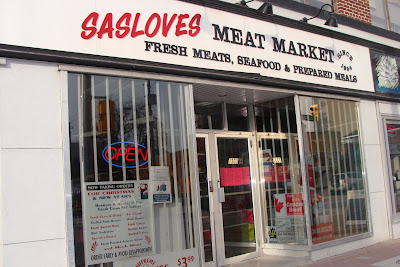


Saslove's Meat Market sells organic meats and dairy products produced from local farmers.


St. Albert Cheese Factory (Ice Cream and Cheese). I remember going here as a child to have ice cream and pick up the world famous curds, known best in French Canadian Poutine.


Ontario Grown Sweet Potatoes (Ottawa Organic Farmer's Market). I just love these roasted or cut into fries and grilled.


GENERAL COMMENTS FROM BOOKCLUB MEMBERS


~ The author’s proposed way of life, is seen as a dramatic and unlikely change for most North Americans. However the manner in which Kingsolver shows her commitment and embraces her new rural life is inspirational to readers enticing us to make changes in our daily lives by rising up to the challenge of eating more locally and acknowledging our own personal carbon footprint. Her tone of voice is not preachy, rather she uses light wit and sarcasm to demonstrate how eating locally can be satisfying, while recognizing the hardships and difficulties of traditional farming.


~ In addition to the meaningful messaging concerning the harmful effects the industrialization of food has on the environment and health, I was drawn to the sense of community and family that Kingsolver so urgently desires to salvage and preserve for generation after generation. This type of lifestyle goes beyond growing your own food and buying locally, it is about the bonding families and friends achieve over farming, gardening, cooking and most importantly eating together.


~It was a good transition to have read Omnivore’s Dilemma by Michael Pollan prior to Animal, Vegetable, Miracle, as it provided a more global picture of the industrialization of food with a lot of scientific content; whereas the latter really brought the notion of eating locally to a practical community level. Kingsolver’s shares her practical knowledge of eating locally and provides realistic solutions for urban dwellers to contribute to this so called “movement.”


~The main reason I enjoyed reading this book is that Kingsolver is not preaching to us, rather she is presenting information based on her experience. Furthermore, she is humble enough to recognize that we do not all have the luxury of selling our home and buying a four-acre farm to begin working night and day on our own vegetable, fruit and meat produce. Instead, she shares realistic suggestions for the normal urban dweller on what they can do to help support the "locavore" movement and eat as much local food as possible.


COMPILATION OF OUR FAVORITE QUOTES


"But meat, poultry and eggs from animals raised on open pasture are the traditional winter fare of my grandparents, and they serve us well here in the months when it would cost a lot of fossil fuels to keep us in tofu....Bananas that cost the rain forest, refridgerated trucked soy milk, and prewashed spionach shipped two thousand miles in plastic containers do not seem cruelty free in this context." (225)


“If every U.S. citizen ate just one meal a week (any meal) composed of locally and organically raised meats and produce, we would reduce our country's oil consumption by over 1.1 million barrels of oil every week. That's not gallons, but barrels. Small changes in buying habits can make big differences. Becoming a less energy-dependent nation may just need to start with a good breakfast.” (5)


“If many of us would view this style of eating as deprivation, that's only because we've grown accustomed to the botanically outrageous condition of having everything, always." (65)"I refused to believe a fuel-driven food industry was the only way to feed my family." (346)


"We came to think of ourselves, in the best way, as a family of animals living in our habitat." (335)"Eating locally in winter is easy. But the time to think about that would be in August." (309)


"Our goal had not really been to economize, only to exercise some control over which economy we would support. ... The big savings come from a habit of organizing meals that don't include pricey processed additions." (307)


"I've heard a Buddhist monk suggest the number of food-caused deaths is minimized in steak dinners, which share one death over many meals." (221)


"It's tempting to reach for melons, red peppers, tomatoes, and other late-summer delights before the summer even arrives. But it's actually possible to wait, celebrating each season when it comes, not fretting about its being absent at all other times because something else good is at hand." (65)


DISCUSSION TOPICS/QUESTIONS


The themes present in the book spawned great conversations and discussions ranging from socioeconomic and socio-political aspects of past and present times in relation to the food industry. We all agreed that this book and practically applying it to the meal we enjoyed would make us more conscientious of the food we purchase in terms of locality and season. Here are some of the interesting topics and questions we discussed, sometimes with the utmost passion and concern for the state of the world:


What have you done in the last year to change your personal habits, that when they add up really make a difference?


What plans do you have this winter for eating local or seasonally?


Do you try to eat seasonally, or do you just buy whatever looks good in the store regardless of whether it’s in season locally or had to be shipped in from another hemisphere? Will you change your ways after reading this book?


What’s the thing that bothers you the most about cheap food and how it came to you? Unfair labour wages? Environmental concerns?


How often do you have dinner together with your family? If not often why and do you think it is important?


Do you have many restaurants in your area that support this sort of connection?